TKOSolutions

Live operating environment / Live operating environment

RachelOS: A Live Operating Environment

Follow-up, prioritization, and context reconstruction depended on the operator being available.

What this is

Live operating environment

My role

I designed, built, operate, and audit the system myself.

Why it matters here

You can inspect how I turn fragmented work into explicit workflow, evidence, controls, and handoff-ready artifacts. That is the same discipline I apply after a Recovery Review.

1. Buyer or operating context

A relationship-driven operating environment with active work spread across records, messages, notes, and one experienced operator's memory.

2. Triggering problem

Follow-up, prioritization, and context reconstruction depended on the operator being available.

3. What was breaking

The underlying records existed, but the current context, next action, missing information, and approval state were not visible in one working surface.

4. Why conventional approaches were insufficient

A cleaner CRM view would still have stored activity without resolving priority, source authority, approval, or the next action.

5. My role

I designed, built, operate, and audit the system myself.

6. Intervention

RachelOS introduced durable relationship memory, source-aware facts, prioritized work, visible missing information, human-approved outreach, and system-health checks. AI assists with bounded extraction and drafting; it does not act autonomously.

7. Evidence or result

Context, priority, approval state, and system health are inspectable in daily work. It is a working demonstration of how I make workflow, evidence, approvals, and handoffs explicit.

8. Why this matters to a prospective buyer

You can inspect how I turn fragmented work into explicit workflow, evidence, controls, and handoff-ready artifacts. That is the same discipline I apply after a Recovery Review.

Evidence record

What can be supported publicly.

Current, redacted operating screens for the queue, relationship memory, human approval, daily work, and system health.
Repository-backed implementation history and tests supporting the published operating mechanisms.
Visible controls that keep consequential outbound actions under human approval.

Inspectable proof

The operating mechanisms, in current screens.

Redacted views of the system as it runs today.

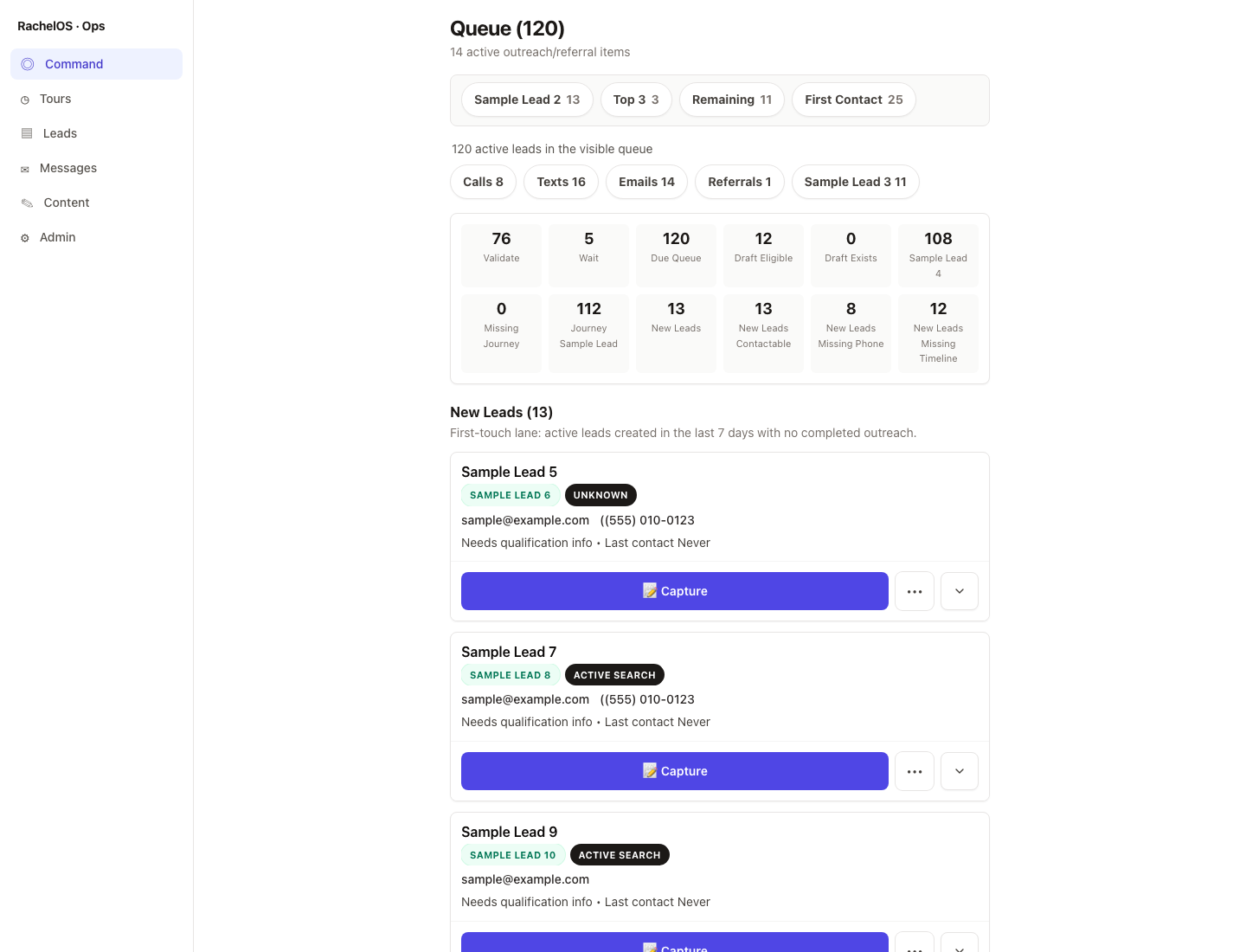
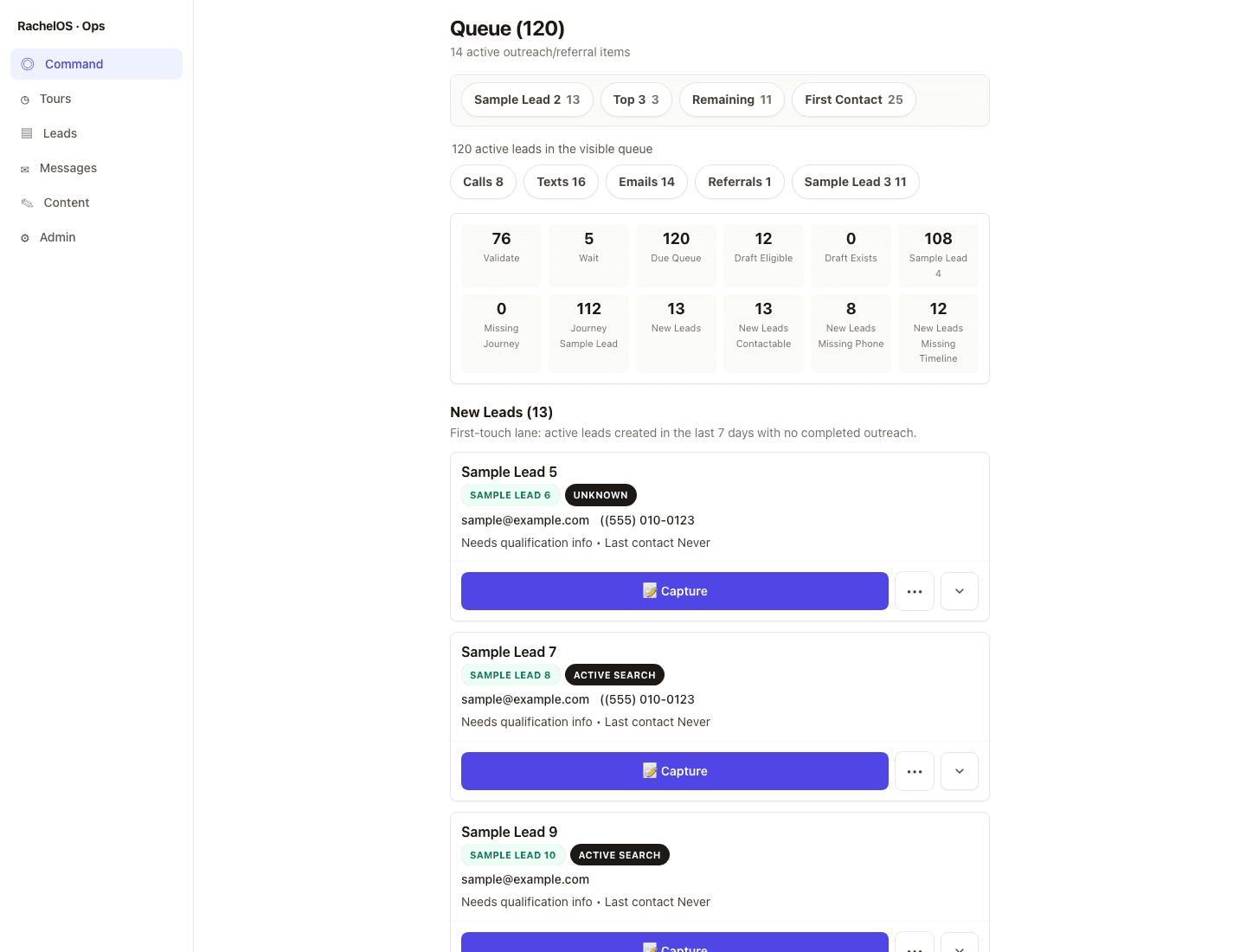
Redacted RachelOS queue showing active work and next actions.

Prioritized work

The queue makes active work, next actions, and operating lanes visible.

Redacted RachelOS review surface showing human approval controls.

Human approval

Recommended relationship actions remain under human review before execution.

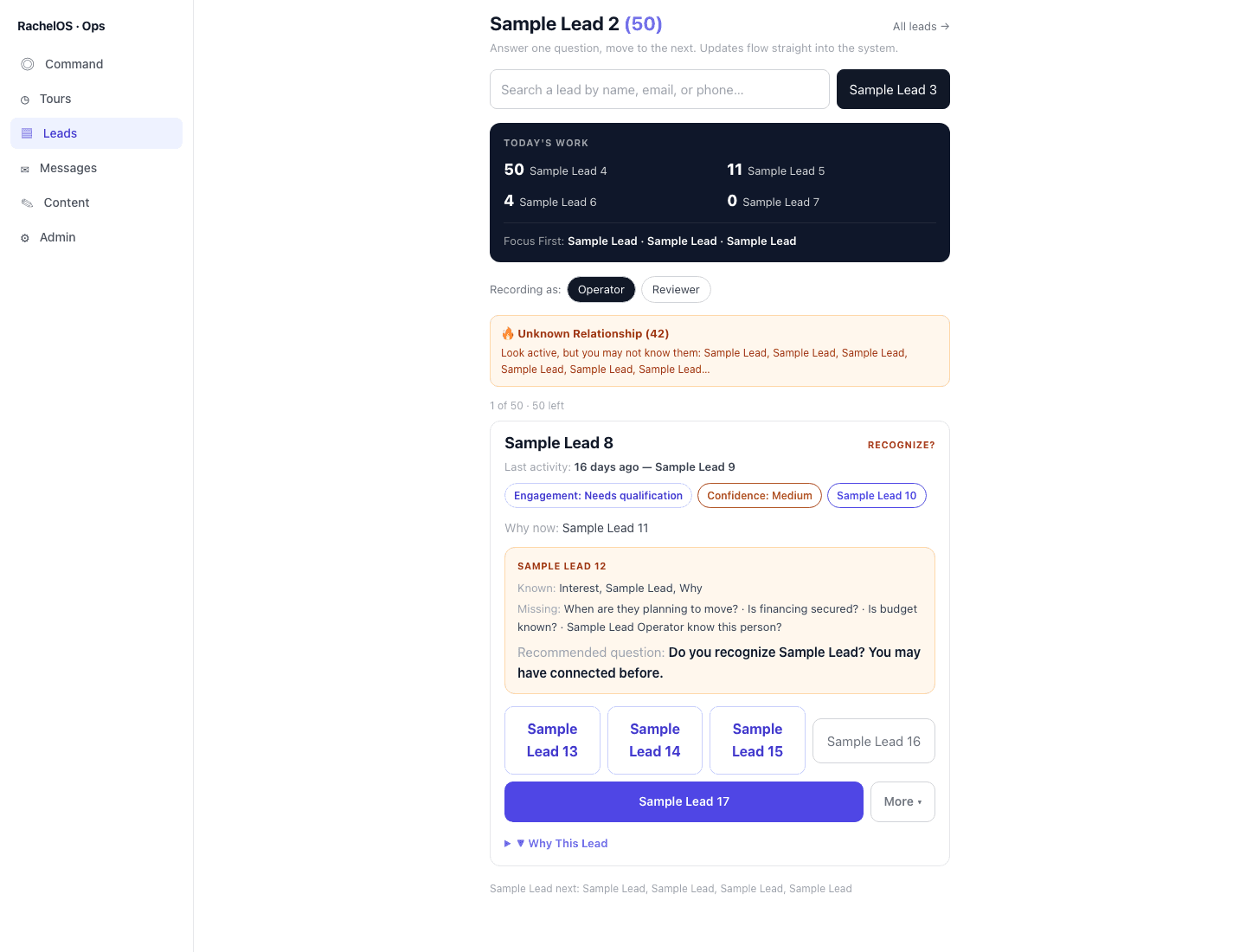
Redacted RachelOS workspace showing relationship context and next action.

Durable context

Current context, recent activity, and the next recommended action share one working surface.

Redacted RachelOS system-health view showing operating checks.

Operating health

System checks and execution status make failures visible instead of leaving them to operator intuition.

Limits of this evidence

One independently operated, non-healthcare environment. It supports implementation and governance discipline. It is not evidence of enterprise scale, healthcare compliance, prior-authorization performance, or a financial outcome.

How to read this evidence

Program Recovery Conversation

Bring one program under pressure.

The Program Recovery Review establishes what is actually wrong with one program, separates symptoms from addressable causes, and gives leadership a 90-day action plan.