Operations
Years inside work where ownership, controls, and exception handling had to be explicit—not left to memory.
Selected work
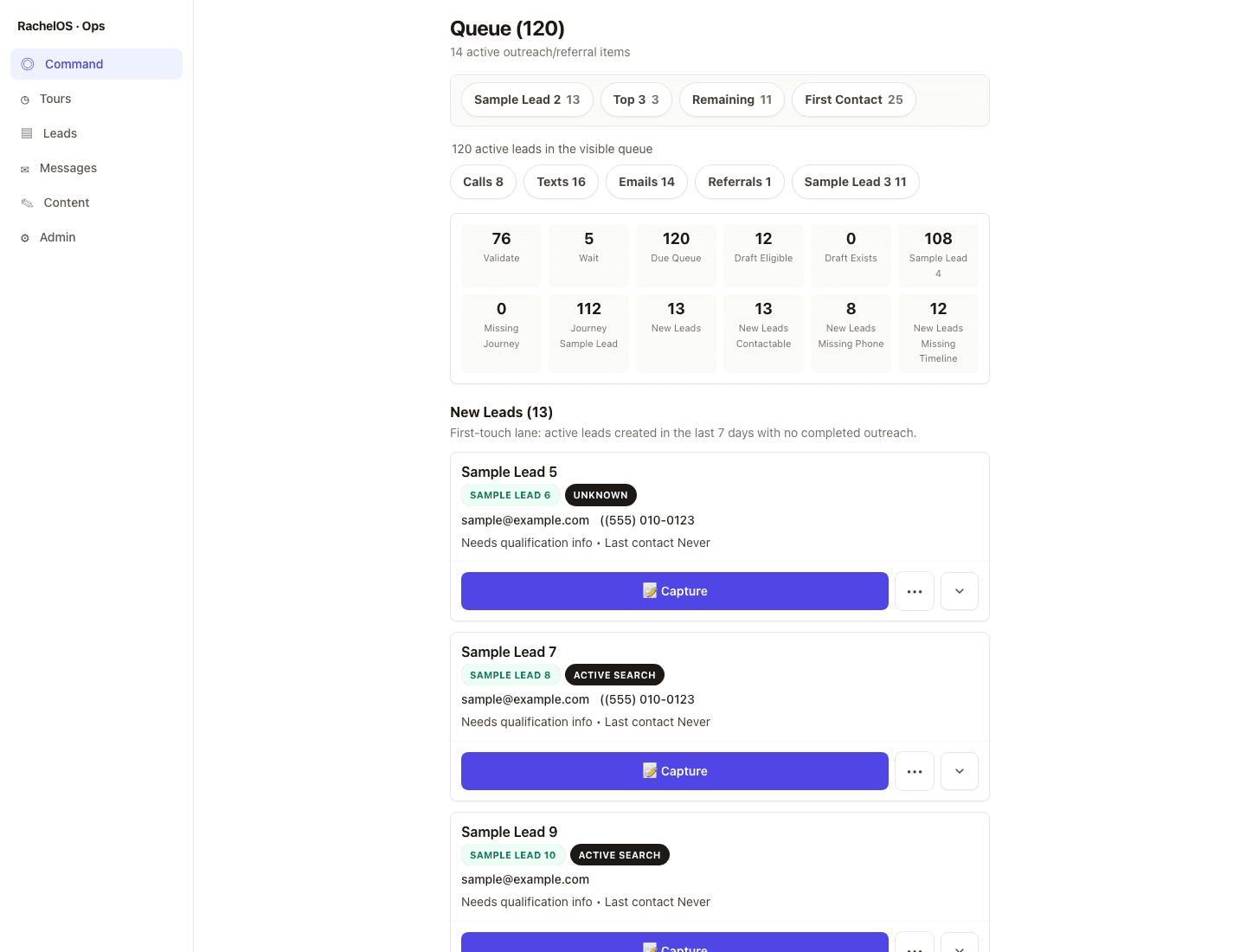
RachelOS shows a relationship workflow I designed, built, and operate. The synthetic healthcare lab makes cross-system decisions inspectable. Together they show how I move from an operating problem to explicit rules, controls, and usable interfaces.
Relationship-driven business
The business had a CRM, email, texting, a website, and a growing book of relationships. The information existed, but the operating logic did not.
Healthcare proof · synthetic
Eligibility, benefit coverage, procedure policy, provider qualification, UM routing, and the claims-control artifact remain separate decisions. The lab shows the questions a real release must answer.
Run the decision labPolicy → Obligation → Capability → Workflow → System → Control → Owner → Evidence → Outcome
The prototype uses synthetic rules and identifiers. It demonstrates decision decomposition; it is not a deployed payer system or a compliance certification.
See the $15,000 Readiness SprintWhy this work
The work combines operating discipline, product thinking, and hands-on implementation. That mix is the point of TKO.
Years inside work where ownership, controls, and exception handling had to be explicit—not left to memory.
Experience translating how people actually work into systems, workflows, and decisions a team can use.
RachelOS brought those disciplines together in one system designed and built from the operating problem outward.
From proof to your project
For healthcare readiness, I trace one approved obligation through the teams and systems that must deliver it. For owned demand, I connect buyer content, inquiry capture, context, and an accountable next action.
Each engagement names the deliverables, owners, acceptance criteria, dependencies, and commercial terms before the work starts. You work with me through the agreed handoff.
Compare the engagementsOne principal · Priced up front
Bring one healthcare mandate, platform transition, or client workflow that needs a clear path to delivery. In 30 minutes, I will talk through the decisions, systems, and dependencies with you, then identify the right scope and next step.