Transformation Recovery
Funded modernization, AI, or operating model programs are active, but leadership cannot see where execution is actually stalling.
Operational Intelligence
TKO helps leaders see where work is actually failing, establish operational truth, and build systems that turn scattered signals into governed facts, trusted next actions, human approval, and measurable outcomes.
See the Truth
Surface what's actually happening.
Drive Alignment
Turn insight into trusted next actions.
Deliver Outcomes
Improve performance that compounds.
Problem Architecture
TKO organizes expertise around operating problems, not industries. Healthcare is the launch wedge because these problems are urgent and proof-backed there.
Funded modernization, AI, or operating model programs are active, but leadership cannot see where execution is actually stalling.
Systems show tasks and reports, but the real handoffs, delays, exceptions, and manual workarounds remain hidden.
Work waits because facts, authority, escalation rules, or the trusted next action are unclear.
Milestones slip even while individual teams report progress because cross-team dependencies are not operationally visible.
Meetings, committees, and dashboards exist, but they do not produce accountability or faster decisions.
AI pilots demonstrate capability but do not become trusted workflows because control, governance, and human approval are missing.
Operating Intelligence Framework
This is the TKO operating model: signals become memory, memory becomes governed facts, facts become visible state, state produces one canonical action, a human approves it, and results are measured as outcomes.
01
Raw activity from email, calls, tickets, systems, and conversations enters the system unfiltered.
02
Signals persist across time and source instead of evaporating after a single touchpoint.
03
Memory is resolved into source-aware, governed facts that leaders can trust.
04
Facts roll up into a current, accurate view of where every workflow actually stands.
05
State produces one trusted next action instead of competing reports and opinions.
06
A person reviews and authorizes the action before it executes. AI never acts alone.
07
Approved actions are measured against real operating results, closing the loop.
AI is a controlled mechanism inside the operating system. It does not replace human decision authority, and it does not become the category.
Industries
TKO is not organized as separate vertical businesses. Healthcare, Financial Services, Wealth and Asset Management, and Capital Markets Operations are examples of one operational complexity pattern.
Launch wedge
Prior authorization, care management, interoperability, administrative burden, healthcare AI governance, and payer/provider operating complexity.
Secondary market
Regulated operating environments where reporting, workflow, decision rights, and platform modernization intersect.
Secondary market
Advisor workflows, relationship context, portfolio operations, platform adoption, and client service handoffs.
Secondary market
Trade support, settlement, exception handling, institutional workflow, and operational control in high-dependency environments.
These industries share the same operating conditions: complex workflows, regulatory constraints, fragmented ownership, and high-cost operational failure. Work crosses boundaries faster than leaders can observe, govern, and act on it.
Proof
Production system proof, anonymized enterprise healthcare work, and cross-industry pattern recognition.
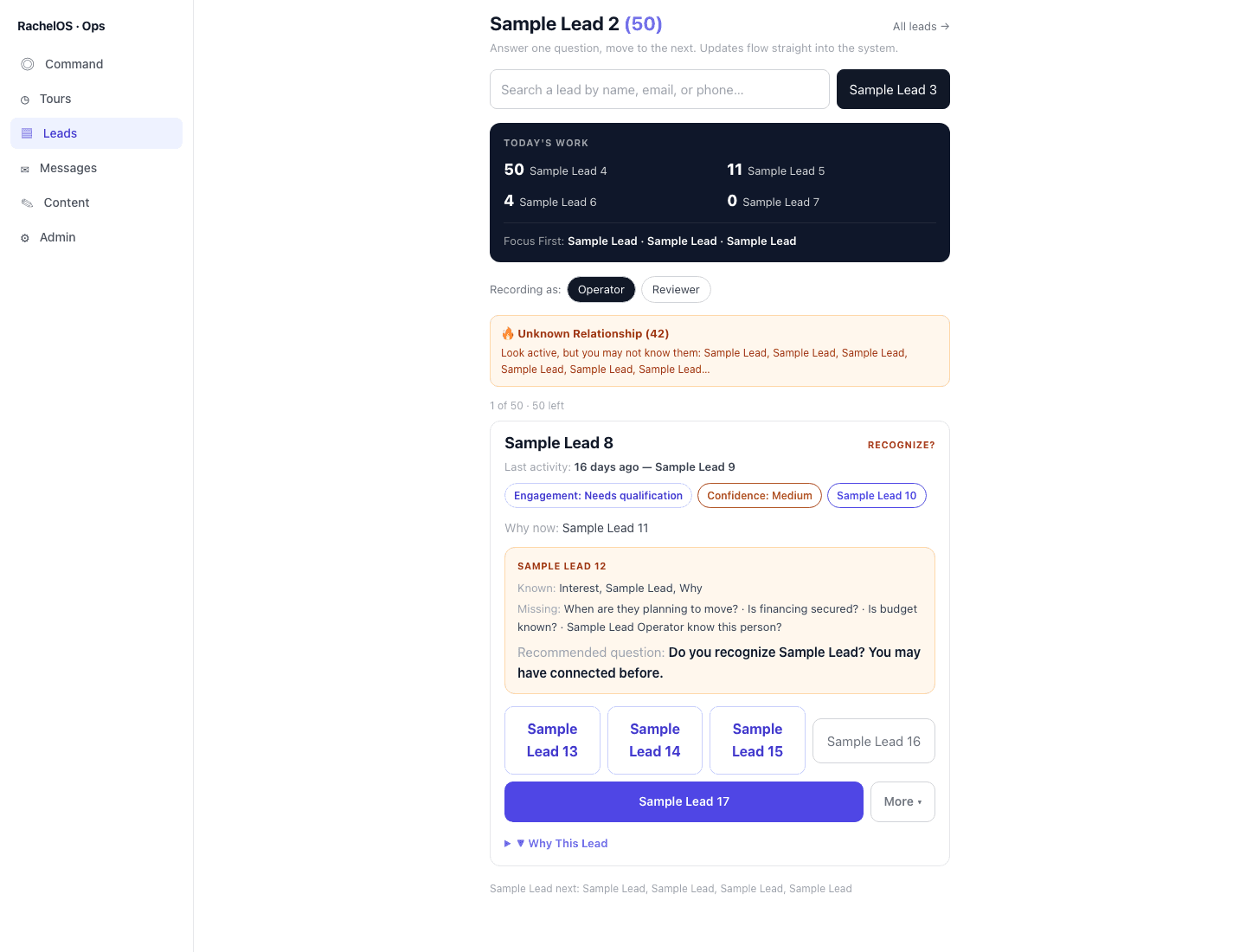
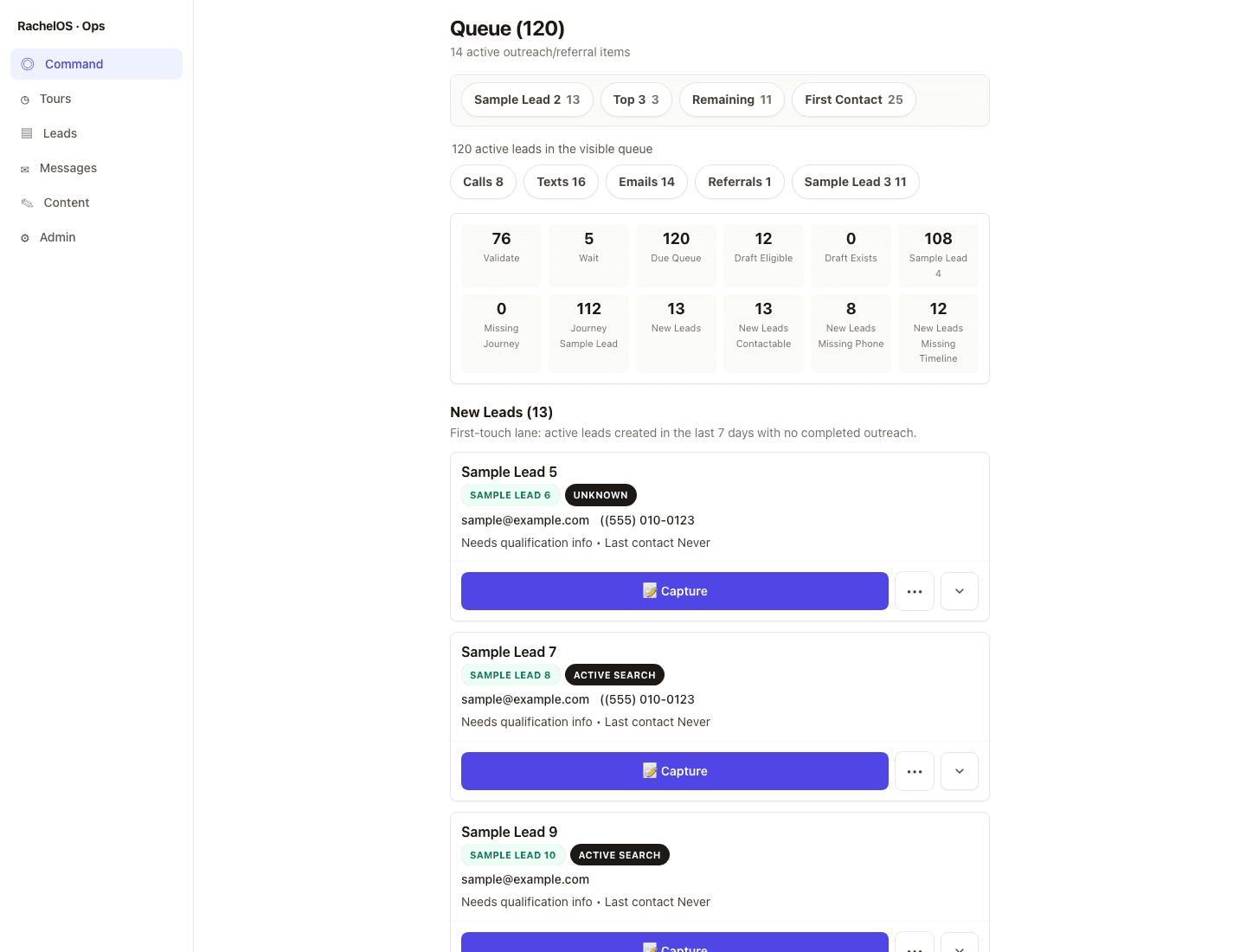
Leads and relationship context were scattered across channels, leaving the operator without one trusted view of who needed attention and what action should happen next.
Outcome — The platform operates as a relationship intelligence and action system with one daily view of priorities, structured facts, gap detection, and human approval before any AI-assisted outreach.
Read case studyAdministrative review burden persisted because workflow, decision rights, compliance, and human review tiers were not redesigned together.
Outcome — Resume-attributed outcomes include 40-60% reduction in manual review effort, $200M+ annualized operational value, and 15-25% productivity improvement. Publication remains subject to attribution confirmation.
Read case studyA large modernization program risked execution failure because dependency complexity and executive visibility gaps were not fully exposed.
Outcome — Program risk was managed across approximately 24 application areas with stronger dependency visibility and executive confidence. Specific delivery metrics are gated.
Read case studyCMS interoperability requirements were being treated as a technical compliance project instead of an operating model change.
Outcome — Resume-attributed outcomes include 20-30% faster integration timelines and support for exchange across dozens of provider organizations. Attribution remains gated.
Read case studyService Ladder
The Diagnostic is the paid front door. Build and Fractional Advisor engagements follow when operational truth identifies what should be built or governed.
Primary entry point
A fixed-scope diagnostic for leaders who need to establish where complex work is actually failing and what should be fixed first.
Downstream conversion offer
Design and implementation path for turning diagnostic findings into a working Operational Intelligence System.
Post-diagnostic or post-build retainer
Advisory support for sustaining operating cadence, governance, and transformation momentum after the initial work.
Founder Credibility
The same operating failures appear in healthcare, wealth management, asset management, capital markets, and enterprise programs: work crosses boundaries faster than leaders can observe, govern, and act on it. TKO is built on recognizing that pattern, not on industry tenure alone.
Diagnostic Entry Point
TKO brings clarity to complexity so organizations can move with confidence.